I created VirtFoundry: a Kubernetes operator on a path to CNCF Sandbox
I created VirtFoundry
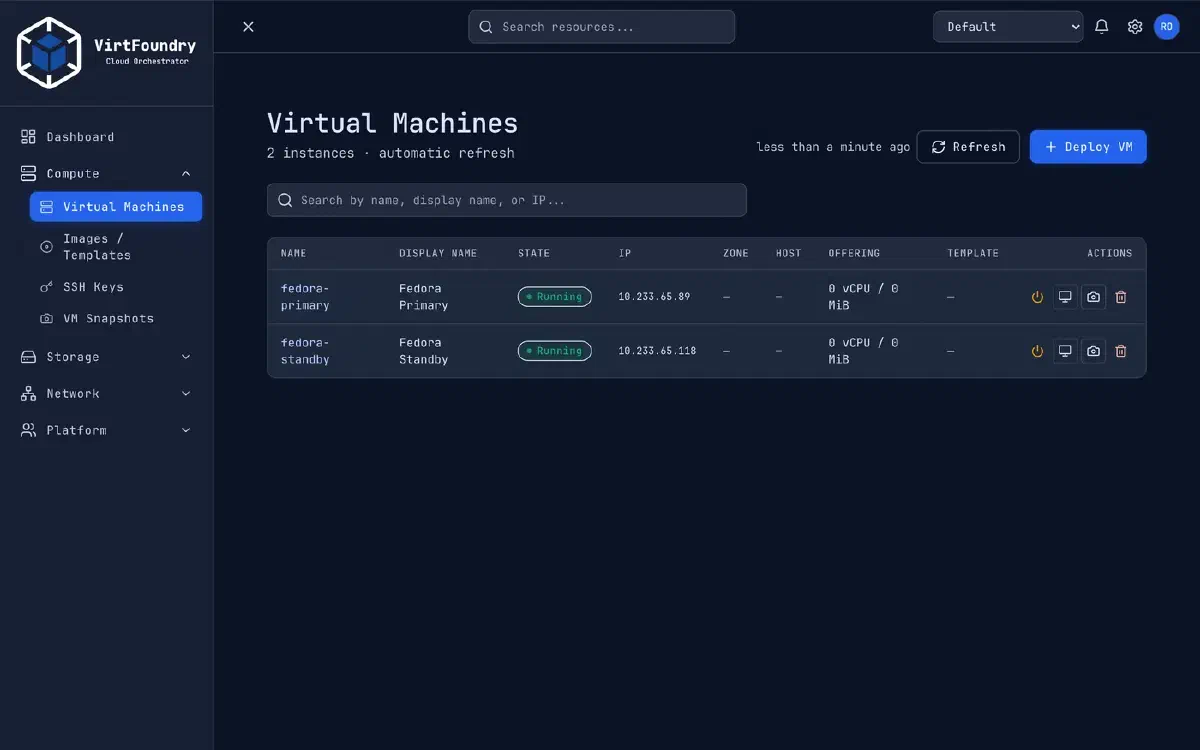
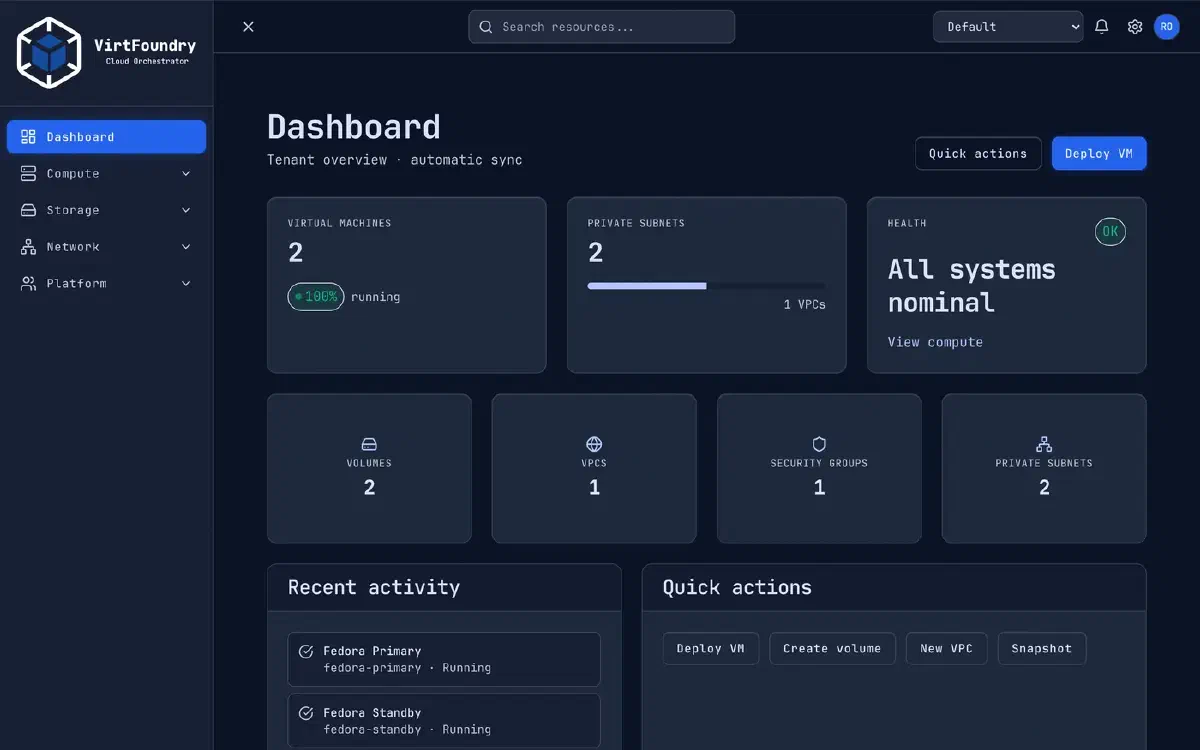
. It is a Kubernetes operator — virtfoundry.io CRDs — that turns a cluster you already run into a multi-tenant private cloud: tenants, VPCs, VMs, volumes, snapshots, IAM, REST API, and a UI.
The hypervisor is KubeVirt . Source of truth is not MySQL: it is Kubernetes. The destination is a CNCF Sandbox application.
It is not a CNCF project yet. We are building the operator, charts, Terraform provider, and community so we can apply when the repo meets the maturity bar — not before.
The problem I wanted to solve
If you already operate Kubernetes and still need VMs, the realistic options are:
- A second silo — Proxmox (or similar) beside the cluster. Two backups, two networks, two sources of truth.
- Raw KubeVirt YAML — an excellent hypervisor API and a terrible private-cloud product. Every tenant becomes a pile of
VirtualMachine, NAD, PVC, and RBAC by hand. - Full OpenStack / HCI — it works, and you now operate another cloud next to Kubernetes.
I already wrote about the CloudStack homelab path . VirtFoundry is the other path: Kubernetes-native. If you already want the cluster, you should not need a second appliance just to treat VMs as cloud resources.
KubeVirt runs the VM. It does not give you day-2 private cloud:
- first-class tenants
- catalog (templates / offerings)
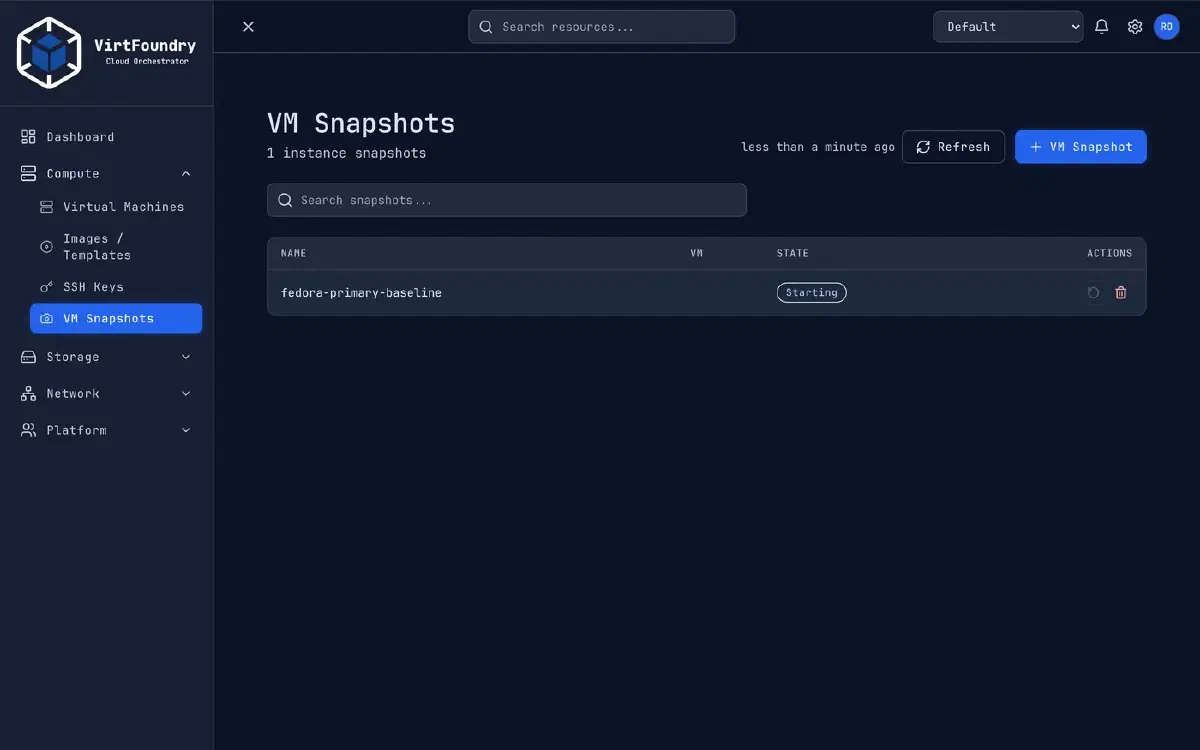
- volume and snapshot UX
- IAM plus an API that Terraform and GitOps can drive
- a UI that is not
kubectl apply
Architecture: operator first
The control plane is an operator. The API group is virtfoundry.io. Production store is Kubernetes only (store.driver=kubernetes) — no MySQL on the critical path.
| Layer | What it is |
|---|---|
| Operator | Controllers + CRDs (Tenant, Instance, VPC, Disk, snapshots, IAM, …) |
| core | REST /api/v1 + React UI — clients of the same store |
| Helm | Two charts: virtfoundry-operator and virtfoundry (API + UI) |
| Terraform | First-party provider on the Registry |
| Runtime | KubeVirt (VM), Multus (tenant net), CSI (disks; Longhorn in the homelab) |
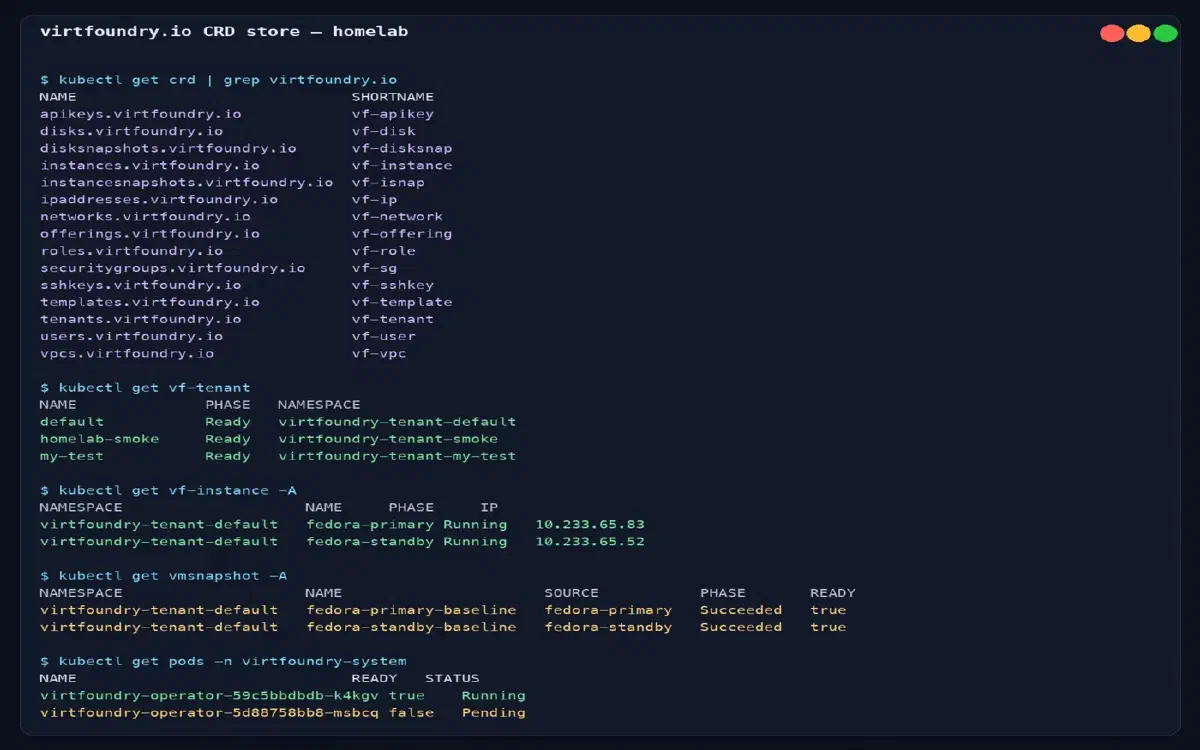
The design is compose CNCF building blocks, not reinvent the hypervisor or CSI. The operator reconciles Tenant (namespace + status) and Instance (phase, IP, KubeVirt name). Other kinds already exist as CRDs; controllers close the gap over time. GitOps comes free: Helm + Argo CD, CRs as source of truth.

What you can use today
Current chart release: 0.7.0. In the homelab that already covers the demo a TOC reviewer will click: VM + volume + snapshot + UI.
| Capability | Status |
|---|---|
| Tenant + IAM (JWT, API keys, roles) | Works |
| VM (deploy, start/stop, console) | Works — KubeVirt |
| Volume + VM snapshot | Works; volume snapshots need CSI snapshot support (Longhorn, not local-path) |
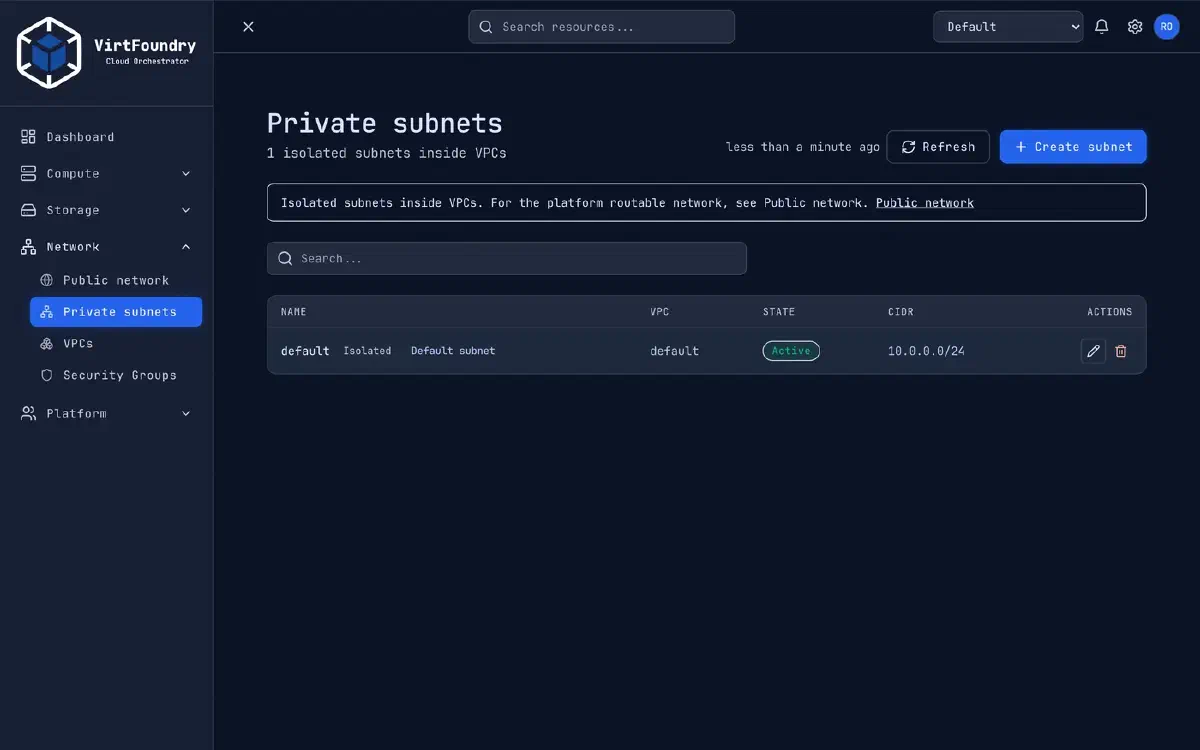
| VPC / isolated net / public IP | Works with Multus; without Multus the UI comes up and tenant networking does not |
| L4 load balancer (VIP + listener) | Evolving on the roadmap |
| SSO / billing | Kept out of core on purpose |
Homelabs count. The three maintainers are already in ADOPTERS.md
. Sandbox still needs adopters outside MAINTAINERS.md.
Honest comparison
| Proxmox VE | “Just KubeVirt” | Harvester | VirtFoundry | |
|---|---|---|---|---|
| Model | Hypervisor appliance | VM YAML | Full HCI | IaaS control plane on your cluster |
| Multi-tenant | Datacenter ACLs | You build it | Appliance | First-class tenant + IAM |
| GitOps | Not the product | Possible | ISO / HCI | Helm / Argo, CRDs |
| Best when | ISO, ZFS, PBS, no K8s | A few VMs, YAML is fine | You want HCI | You already run Kubernetes and want cloud UX |
Proxmox still wins if you want an ISO, PBS, ZFS datasets, or LXC as product features. Stay there. VirtFoundry is not a drop-in for those.
Harvester is HCI. VirtFoundry assumes BYO Kubernetes (kubeadm, kubespray, managed).
CloudStack remains classic IaaS — I still run it in the homelab. VirtFoundry is the cousin that lives on the same cluster as container workloads.
CNCF Sandbox: destination, not status
CNCF Sandbox has a hard checklist: full Apache-2.0, governance, CoC, security, repo age ≥ 6 months, maintainers in ≥2 organizations, and evidence the project is reusable — not a reference architecture.
Already in place:
- Apache 2.0 +
NOTICEon every official repo GOVERNANCE.md,MAINTAINERS.md,CONTRIBUTING.md, CNCF Code of Conduct,SECURITY.md- Three maintainers, two orgs (MAINTAINERS )
- Operator + Helm + Terraform — a product, not a diagram
- Application draft:
CNCF-SANDBOX-APPLICATION.md
Still open:
- Age of
core— created 2026-08-03, gate ~2027-02-03 - Adopters beyond maintainers
- Public talk / KubeVirt community intro (comes later)
Do not write “CNCF project”, “we are on the landscape”, or “we already applied”. The destination is Sandbox. Status today is Apache 2.0 open source, following foundation conventions.
Try it
Docs: virtfoundry.github.io/helm-charts
. Quickstart under 30 minutes. Pin the version — do not use :latest.
helm repo add virtfoundry https://virtfoundry.github.io/helm-charts
helm repo update

helm install virtfoundry-operator virtfoundry/virtfoundry-operator \
  --version 0.7.0 \
  -n virtfoundry-system --create-namespace

helm install virtfoundry virtfoundry/virtfoundry \
  --version 0.7.0 \
  -n virtfoundry-system \
  --set secrets.rootPassword='change-me' \
  --set secrets.jwtSecret='change-me'
Order: cluster platform (KubeVirt + Multus + CSI) → operator → API/UI. Without Multus, VPC and public IP do not work. Without CSI snapshots, volume snapshots do not work — use VM snapshots in the lab.
Repos:
- core — API + UI
- operator — CRDs + controllers
- helm-charts — charts + docs
- terraform-provider-virtfoundry
If you install in a homelab: file an issue, pick a good first issue, or open a PR on ADOPTERS.md. That weighs more than a like when the Sandbox application exists.
Canonical comparison: Why VirtFoundry . Traction checklist: CNCF-CHECKLIST.md .
kubectl get related
| NAME | READY | STATUS | AGE |
|---|---|---|---|
 kubevirt-on-apple-silicon-kubesilicon KubeVirt does not run on Apple Silicon, so I built KubeSilicon | 1/1 | Available | <1d |
 about-my-homelab Goodbye Proxmox? Why I Migrated My Homelab to Apache CloudStack | 1/1 | Available | 333d |
 nginx-gateway-api-kubernetes Is NGINX Ingress Controller Dead? Meet NGINX Gateway Fabric | 1/1 | Available | 321d |
kubectl get events